Research Topics
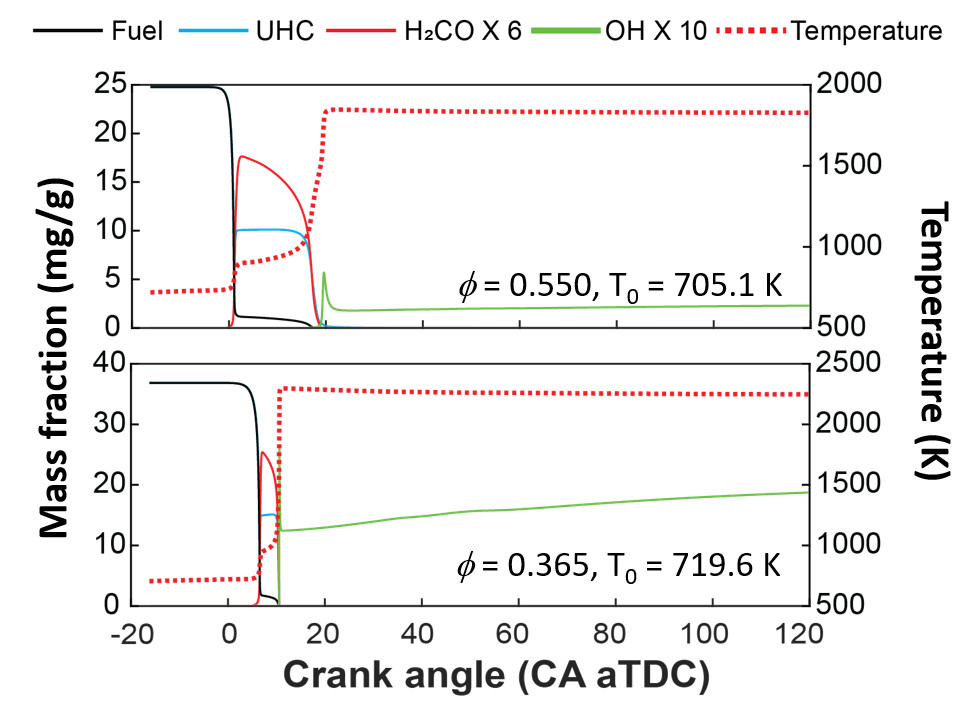
Formation Mechanism of Formaldehyde in Cold-Operation
Formaldehyde (CH2O or H2CO) is a known probable carcinogen but still not under regulation’s radar.
It has reviously been reported the formaldehyde is emitted during during cold-operation of combustion engines, however the mechanism had not been clearly understood.
Formaldehyde is a well-known intermediate species during combustion, and a famous marker for first-stage ignition process which consumes in following ignition processes.
Through study, it was revealed that formaldehyde can be formed outside of spray pheriphery where the mixture is lean but has high initial temperature, by stretching the first-stage ignition till the emission stage.
Sensitivity anaylsis to fuel reactivity was implemented and confirmed that inner-spray region is unlikely to produce it due to the mixture development.
A fast-response novel optical diagnostics was developed to measure time-resolved formaldehyde emission using mid-IR laser and frequency modulation.
advanced
- content
- Paper link test
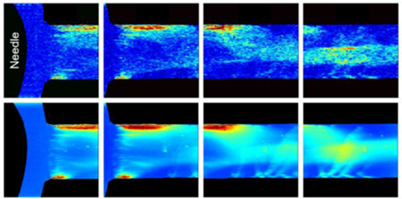
High-Speed Optical Diagnostics of Reactive Flows
Characterization of reactive flows remains as an important component of research and development for advanced energy conversion systems. We apply cutting-edge high-speed imaging techniques for spatio-temporal assessment of spray flame.
Alternative Fuel and Advanced Combustion
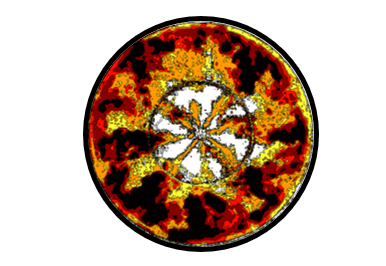
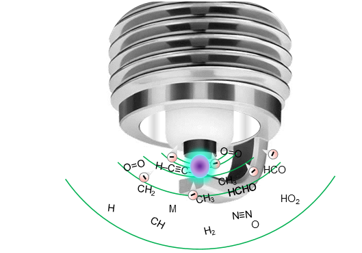
Hazardous emissions such as nitrogen oxides (NOx) and particulate matter (PM) emissions are serious problems in combustion engines. We are focusing on simultaneous reduction of NOx and PM emissions by advanced combustion concepts (lean-burn, plasma ignition) with alternative fuels.
Machine Learning for Spray/Combustion Prediction
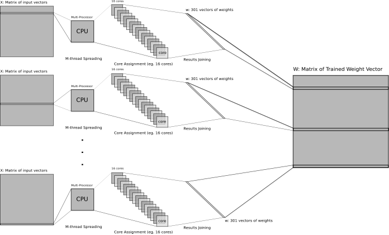
Applications of artificial intelligence (AI) using massive experimental data enabled cost-effective prediction of fuel spray and enigne combustion. We are developing innovative computational models for virtual sensor and spray combustion prediction.
Computational Fliud Dynamics of Gasoline/Diesel Sprays
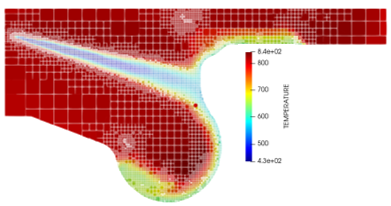
CFD results contain detailed thermodynamic data such as temperature, pressure, velocity, etc. Combination of experimental work and CFD result provide comprehensive understanding of spray combustion process. We use CONVERGE code for Eulerian and Lagrangian spray combustion simulations.
X-ray Radiography
While conventional light sources suffer from scattering and low energy level, x-ray enables internal nozzle flow and internal nozzle structure characterization. We use x-ray (APS at Argonne National Laboratory) and commercial machine (Nikon XT H225ST at CAVS) for cavitation, near-nozzle, and structure preparation for CFD simulation.